
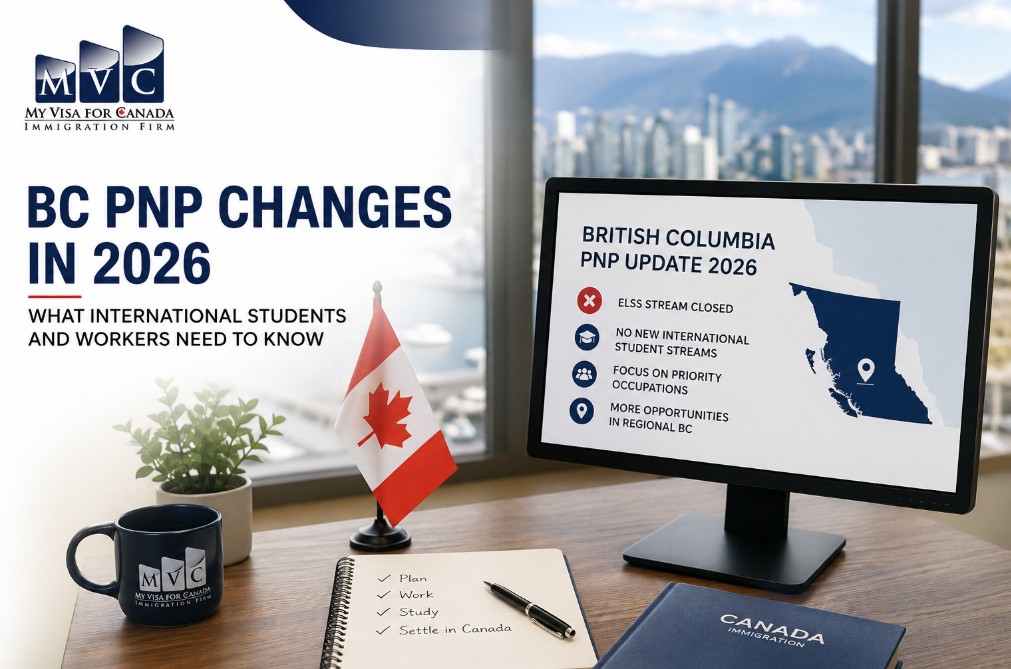
British Columbia has announced major updates to the BC Provincial Nominee Program (BC PNP) in 2026, and many international students and workers are now wondering how these changes may affect their pathway to permanent residence.
For years, many people viewed BC PNP as one of the more accessible pathways to PR in Canada. But with increasing immigration pressures, reduced nomination allocations, and changing labour market priorities, the province is becoming much more selective.
If you are already in Canada as a student, worker, or visitor, these changes are important to understand before making future immigration decisions.
What Changed in BC PNP in 2026?
The BC government recently announced several major updates to the BC Provincial Nominee Program, with a stronger focus on targeted occupations and economic priorities.
Some of the biggest changes include:
- closure of the Entry Level and Semi-Skilled (ELSS) stream
- no new international student streams being launched
- stronger prioritization of healthcare, childcare, construction trades, and high economic impact workers
- increased focus on regional communities outside Metro Vancouver
These changes reflect a broader shift happening across Canada, where immigration programs are becoming more selective and focused on labour shortages and economic priorities.
The ELSS Stream Is Officially Closed
One of the biggest changes is the official closure of the Entry Level and Semi-Skilled (ELSS) stream.
This pathway was previously used by many workers in industries such as:
- hospitality
- food service
- tourism
- trucking
- retail
- certain manufacturing and entry-level occupations
The final invitations under this stream were issued in December 2024, and the province has now confirmed that the stream is officially closed.
For many workers who were planning to rely on this pathway, this announcement creates uncertainty about future PR options in British Columbia.
No New International Student Streams
Another important update is that BC PNP will not be launching new international student streams.
This is significant because many international students in BC expected there would continue to be broad provincial pathways after graduation.
While studying in BC or Canada may still provide additional registration points under BC PNP, graduating alone no longer guarantees a straightforward pathway to nomination.
As a result, many students may need to be more strategic about:
- their field of study
- work experience
- employer support
- location within BC
- long-term immigration planning
Which Occupations Are Being Prioritized?
BC PNP is now clearly prioritizing occupations connected to essential services and economic growth.
Priority sectors include:
- healthcare
- childcare
- veterinary care
- construction and skilled trades
- high economic impact occupations
This means candidates working in these areas may continue to have stronger opportunities under BC PNP compared to applicants in lower-priority sectors.
Healthcare workers, early childhood educators, and certain skilled trades workers may continue to receive targeted invitations as the province focuses on labour shortages.
Regional BC Is Becoming More Important
Another trend many people may not realize is BC’s increased focus on regional communities outside Metro Vancouver.
The province has stated that a significant percentage of nominations are expected to support workers living and working in regional areas of BC.
This may create additional opportunities for individuals willing to work outside larger urban centres such as Vancouver, Burnaby, or Surrey.
For some applicants, employment in smaller communities could become an important factor in improving immigration opportunities.
What Do These Changes Mean for International Students?
Many international students are now facing a much more competitive immigration environment than previous years.
In 2026, students should avoid assuming that:
- any diploma automatically leads to PR
- all occupations have equal demand
- provincial nomination pathways will remain broad and accessible
Instead, students should carefully consider:
- whether their occupation aligns with BC priorities
- whether their employer may support future applications
- whether they are gaining skilled experience
- whether regional opportunities may improve their pathway
Long-term immigration planning has become more important than ever.
What Should Workers in BC Consider?
Workers already in Canada should review:
- whether their occupation remains competitive under BC PNP
- whether their current work experience is considered skilled
- whether alternative pathways may exist
- whether timing may affect future eligibility
For some individuals, exploring options earlier may be beneficial rather than waiting until permits are close to expiring.
Common Mistakes to Avoid
Assuming Old Information Still Applies
Immigration pathways change frequently. Advice from previous years may no longer apply in 2026.
Waiting Too Long to Plan
Many people only begin researching PR options shortly before their permit expires. This can limit available strategies.
Relying Entirely on Social Media Advice
Immigration information online is often incomplete, outdated, or based on another person’s situation.
Choosing Programs Without Understanding Immigration Outcomes
Some students focus only on getting accepted into a school without considering long-term immigration implications.
What Should You Do Next?
If you are an international student or worker in BC, this is a good time to review your immigration plan instead of waiting until your permit is close to expiring.
The BC PNP changes in 2026 do not mean everyone is out of options, but they do mean applicants need to be more strategic. Your occupation, employer, location, and timing may all affect what pathways are available to you.
If you are unsure how these updates may affect your situation, MVC Immigration can help review your options and discuss possible pathways based on your individual circumstances.